Why Real Mozzarella and Authentic Parmigiano Reggiano Matter
Great Italian food often comes down to something very simple: using better ingredients.
Pizza, pasta, lasagna and many traditional Italian dishes may contain only a handful of ingredients, which means the quality of each one matters. Cheese is especially important because it affects flavor, texture, richness and how all the other ingredients come together.
At La Villa Pizzeria, we believe authentic ingredients produce better flavor. That is why we use quality whole-milk mozzarella, homemade fresh mozzarella, authentic Parmigiano Reggiano and other traditional Italian cheeses throughout our menu.
There are less expensive alternatives available, but when it comes to Italian cooking, we believe the difference can be tasted.
What Makes Real Mozzarella Better for Pizza?
Mozzarella is one of the most important cheeses in pizza making.
Traditional mozzarella is produced using a stretched-curd process known as pasta filata. This gives mozzarella its characteristic soft texture, mild dairy flavor and excellent melting qualities.
For pizza, good mozzarella should melt evenly while complementing the tomatoes, dough, olive oil and toppings rather than overpowering them.
Quality mozzarella can provide:
- A mild, fresh dairy flavor
- A creamy texture
- Excellent melting characteristics
- Good stretch
- Better balance with tomatoes and other toppings
- Less of the heavy or oily character sometimes associated with lower-quality processed cheese products
Different styles of pizza may also call for different types of mozzarella.
At La Villa, depending on the recipe, we may use quality whole-milk mozzarella, homemade fresh mozzarella or imported Italian mozzarella varieties. Each cheese is selected according to the flavor and texture we want from the finished pizza.
Why Authentic Parmigiano Reggiano Is Different From Generic Parmesan
Authentic Parmigiano Reggiano is not simply another type of grated Parmesan cheese. It is a specific, protected Italian cheese made under strict rules governing where it can be produced, how it is made and how long it must be aged.
Parmigiano Reggiano can only be produced in designated areas of Italy, including the provinces of Parma, Reggio Emilia and Modena, along with specified portions of Bologna and Mantua.
It is produced using traditional methods and must be aged for a minimum of 12 months, with many wheels matured for 18, 24, 30, 36 months or longer.
Generic products labeled “Parmesan,” especially those produced outside Italy, are not the same product. They are Parmesan-style cheeses and are not required to follow the same rules for geographic origin, milk sourcing, production methods, ingredients or aging.
That difference matters.
Authentic Parmigiano Reggiano develops a distinctive granular texture, natural crystalline structure and deep savory, nutty and complex flavor that comes from its traditional production process and extended aging.
At La Villa, when a recipe calls for Parmigiano Reggiano, we use the authentic cheese because there is simply no true substitute for the flavor and character it brings to a dish.
Why Parmigiano Reggiano Has So Much Flavor
Parmigiano Reggiano is often called the “King of Cheeses,” and its aging process is one of the major reasons why.
As the cheese matures, moisture gradually decreases while its flavor becomes more concentrated. This produces the rich, savory character that makes Parmigiano Reggiano such an important ingredient in Italian cooking.
Depending on its age, Parmigiano Reggiano can develop nutty, buttery, savory and slightly fruity flavors along with its characteristic granular and crystalline texture.
A relatively small amount can add tremendous depth to:
- Pasta
- Risotto
- Pizza
- Soups
- Salads
- Lasagna
- Meatballs
- Sauces
- Vegetable dishes
Freshly grated Parmigiano Reggiano adds flavor without needing to overpower the dish.
That is an important part of traditional Italian cooking. The goal is not always to use more cheese, but to use better cheese.
Why Quality Cheese Matters on Pizza
Pizza is a simple food, but simplicity makes ingredient quality even more important.
A pizza may contain dough, tomatoes, mozzarella, olive oil and just a few toppings. When there are only a handful of ingredients, there is nowhere for inferior ingredients to hide.
Better Flavor
Real mozzarella provides a clean, mild dairy flavor, while Parmigiano Reggiano contributes a deeper savory and nutty character.
Together, they complement tomatoes, basil, extra virgin olive oil, vegetables and meats.
Better Texture
Mozzarella contributes creaminess and stretch.
Parmigiano Reggiano has a firmer, granular texture and is often finely grated or shaved over a finished dish.
The combination of different cheeses can add layers of texture as well as flavor.
Better Balance
More cheese does not automatically mean better pizza.
Traditional Italian cooking is often about balance. The dough, tomatoes, cheese, olive oil and toppings should each contribute something without overwhelming the other ingredients.
High-quality cheese makes it possible to achieve that balance without relying on excessive amounts.
Is Whole-Milk Mozzarella Better for Pizza?
Whole-milk mozzarella is a popular choice for pizza because of its richer flavor and excellent melting characteristics.
Compared with lower-fat cheeses, whole-milk mozzarella generally produces a creamier texture and fuller dairy flavor.
The best choice, however, depends on the style of pizza.
Fresh mozzarella works beautifully on many traditional Italian and wood-fired pizzas, while whole-milk mozzarella can be ideal for pizzas that require more even coverage and a consistent melt.
At La Villa, we choose the mozzarella according to the pizza rather than treating every style the same.
Why Freshly Grated Parmigiano Reggiano Is Better
Freshly grated Parmigiano Reggiano offers a completely different experience from many shelf-stable grated cheese products.
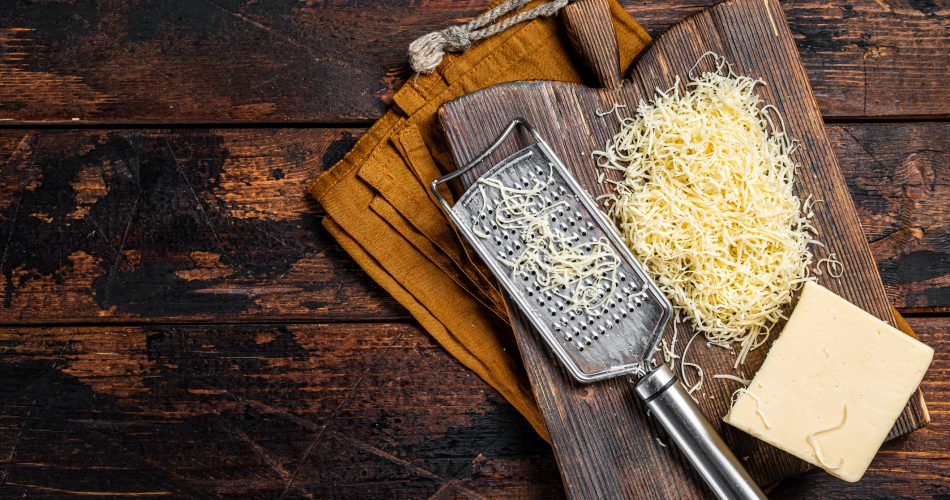
Grating the cheese shortly before serving helps preserve its aroma, texture and natural flavor.
Parmigiano Reggiano can be grated finely over pasta and pizza or shaved into larger pieces for salads and other dishes.
Because its flavor is naturally concentrated through aging, a little can go a long way.
This is one of the reasons authentic Parmigiano Reggiano has been valued in Italian cooking for generations.
The Importance of Authentic Ingredients in Italian Cooking
Italian cuisine is famous for simplicity.
Many classic dishes do not rely on complicated sauces or dozens of ingredients. Instead, they depend on the quality of a few essential ingredients.
Consider a classic Margherita pizza.
The basic ingredients may include:
- Pizza dough
- Tomatoes
- Mozzarella
- Basil
- Extra virgin olive oil
Because the recipe is so simple, every ingredient is exposed.
Better flour affects the crust.
Better tomatoes affect sweetness and acidity.
Better olive oil adds aroma and richness.
And better cheese improves flavor, texture and balance.
This philosophy extends far beyond pizza.
The same principle applies to pasta, lasagna, meatballs, salads, sandwiches and traditional Italian entrées.
Our Approach to Cheese at La Villa
At La Villa Pizzeria, ingredient quality has always been an important part of how we cook.
Since opening our first La Villa location in 1982, we have continued to focus on traditional Italian cooking using ingredients selected for quality rather than simply choosing the least expensive option available.
Our approach includes real whole-milk mozzarella, homemade fresh mozzarella, authentic Parmigiano Reggiano and other traditional Italian cheeses selected according to the dish.
We believe customers can taste the difference.
There are certainly less expensive ways to make Italian food. We simply don’t believe they are better ways.
Continuing an Italian Tradition
Italian cuisine has always demonstrated that simple ingredients can create extraordinary food when those ingredients are chosen carefully.
For generations, Italian cooks have relied on quality flour, tomatoes, olive oil, fresh dairy products, herbs and traditionally produced cheeses to create dishes that have become loved throughout the world.
For more than four decades, La Villa Pizzeria has continued that philosophy through handmade Italian cuisine and family-inspired recipes.
Using authentic Parmigiano Reggiano, real mozzarella and other quality cheeses is part of that commitment.
When you enjoy a pizza topped with real mozzarella or a pasta finished with authentic Parmigiano Reggiano, you are tasting ingredients shaped by generations of Italian cheesemaking knowledge and craftsmanship.
Frequently Asked Questions About Mozzarella and Parmigiano Reggiano
Is Parmigiano Reggiano the same as Parmesan?
No.
Parmigiano Reggiano is an authentic protected Italian cheese produced according to strict geographic and production standards.
Products labeled simply as “Parmesan,” particularly those made outside Italy, are Parmesan-style cheeses and are not the same product.
They may differ significantly in origin, production methods, aging, texture, aroma and flavor. Authentic Parmigiano Reggiano has a character and complexity that generic Parmesan-style cheeses are not required to replicate.
How long is Parmigiano Reggiano aged?
Parmigiano Reggiano must mature for at least 12 months.
Many wheels are aged for 18, 24, 30, 36 months or even longer. As the cheese matures, its flavor generally becomes more concentrated and complex.
Why does authentic Parmigiano Reggiano taste different?
Parmigiano Reggiano develops its distinctive flavor through its traditional production methods and long aging process.
Over time, the cheese develops concentrated savory, nutty and slightly fruity characteristics along with its recognizable granular and crystalline texture.
Can Parmigiano Reggiano be used on pizza?
Yes.
Parmigiano Reggiano can be grated onto pizza before or after baking depending on the recipe. Its concentrated flavor adds savory depth without requiring a large amount.
What is the best cheese for pizza?
Mozzarella is the most common cheese used for pizza because of its mild flavor and excellent melting properties.
Depending on the style of pizza, whole-milk mozzarella, fresh mozzarella, buffalo mozzarella, Parmigiano Reggiano, Pecorino Romano, ricotta and other Italian cheeses may also be used.
Is whole-milk mozzarella good for pizza?
Yes.
Whole-milk mozzarella is widely used for pizza because it provides a rich dairy flavor, creamy texture and consistent melt.
Why is real mozzarella better for pizza?
Quality mozzarella provides a creamy texture, good stretch, excellent melting characteristics and a clean dairy flavor.
It complements the tomatoes, dough and olive oil rather than overwhelming them.
What other Italian cheeses are commonly used on pizza?
Besides mozzarella and Parmigiano Reggiano, traditional Italian pizzas may use Pecorino Romano, ricotta, provolone, fontina, buffalo mozzarella, gorgonzola and other regional cheeses depending on the style and recipe.
Quality Ingredients Make Better Italian Food
Whether it is mozzarella melting across a pizza or freshly grated Parmigiano Reggiano finishing a bowl of pasta, quality cheese can completely change a dish.
Authentic Italian cooking does not always require more ingredients. Often, it simply requires better ones.
At La Villa Pizzeria, our commitment to real cheese is part of a larger philosophy that includes quality flour, Italian tomatoes, certified extra virgin olive oil and carefully selected ingredients throughout our menu.
For more than four decades, we have continued to prepare pizza and Italian food inspired by our family’s traditions and the belief that quality should never be an afterthought.
Visit one of our four La Villa Pizzeria locations or place an order to experience the difference quality ingredients can make.